Black music has always moved the culture. Without us, 85% of popular music, fashion, language, and mannerisms wouldn’t exist.
The real story, though, isn’t just about the artists and tastemakers. It’s about ownership. Who controlled the masters? Who owned the publishing? Who built the infrastructure?
For over a century, Black creatives have fought not just to be heard but to be paid, credited, and respected.
As we mark Black History Month, celebrating legacy and possibility, this is a reminder. Every contract negotiated today sits on the shoulders of founders who risked everything to prove that Black sound deserved Black control.
In the early 20th century, Black artists were recording under exploitative contracts with white-owned companies that profited heavily from blues and jazz. In response, Black entrepreneurs began forming their own labels and publishing companies.
Black Swan Records (1921) – Founded by Harry Pace in Harlem, it was the first Black-owned record label in the U.S. It gave artists ownership and creative space during segregation.
Chess Records – Though co-founded by Polish immigrant brothers, it became a defining home for Black blues artists like Muddy Waters and Howlin’ Wolf, shaping what would later become rock and roll.
Vee-Jay Records – One of the first successful Black-owned R&B labels, distributing gospel, blues, and early soul.
Ownership at this stage was fragile. Distribution was limited. Financing was scarce. But the blueprint was there: if the industry wouldn’t value Black music fairly, Black founders would build their own lane.
The Soul Era: Power & Structured Empires (1950s–1970s)
Then came the era that changed everything.
Motown
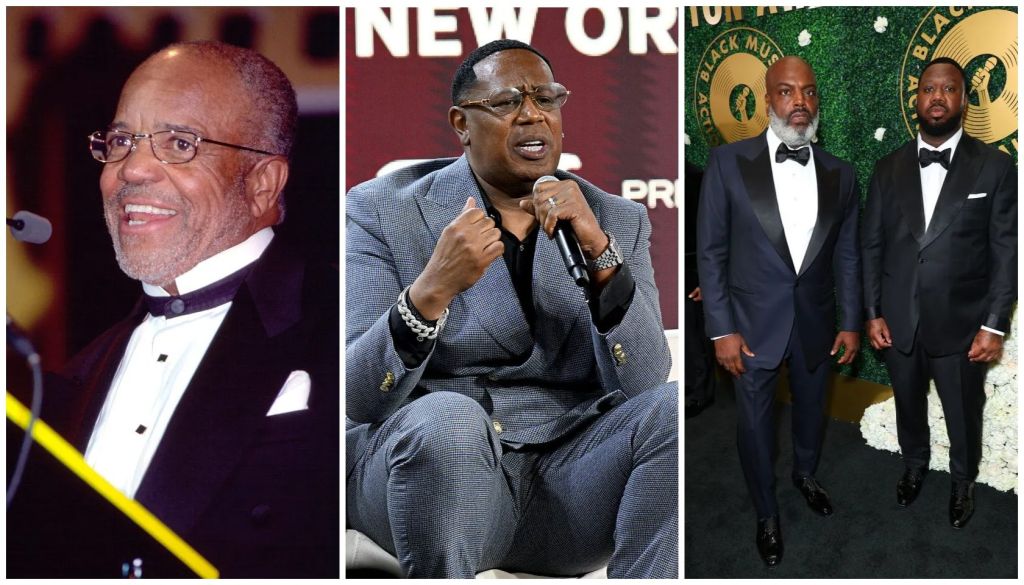
Founded by Berry Gordy in 1959, Motown wasn’t just a label, it was a system.
Artist development. In-house production. Publishing. Touring. Branding.
Gordy built a machine in Detroit that made Black artists global superstars while maintaining ownership infrastructure. The Supremes, Marvin Gaye, Stevie Wonder all came through a Black-owned assembly line of excellence.
Stax Records
Based in Memphis, Stax embodied Southern soul and cultural authenticity. Co-founded by Jim Stewart and Estelle Axton, the label became synonymous with artists like Otis Redding and Isaac Hayes. While not originally Black-owned, it became deeply intertwined with Black leadership and creative control during its peak.
This era proved something crucial: Black labels could compete nationally not just culturally, but commercially.
The 90s: The CEO Mogul Era
The 1990s flipped the script. Rappers weren’t just artists anymore, they were executives. And, they were flashy with it.
Uptown Records
Andre Harrell’s Uptown introduced a polished, urban executive model that blended hip-hop with R&B. It launched Mary J. Blige, Jodeci, and a young Sean “Puffy/Diddy” Combs.
Bad Boy Records
Despite recent uncoverings and bad business dealings, young Sean Combs created Bad Boy and turned hip-hop into a luxury brand. From publishing deals, production arms, fashion crossovers, with his vision and stacked roster of artists, Diddy changed how hip-hop was viewed in the mainstream and the board rooms.
No Limit Records
Master P built No Limit like a hustler-turned-CEO. Because he was.
Independent distribution through Priority Records. In-house production. Ownership of masters. A relentless release schedule that flooded the market and made him one of hip-hop’s first true indie tycoons.
Cash Money Records
Founded by brother duo Birdman and Slim, Cash Money secured one of the most lucrative distribution deals in music history while retaining ownership of masters.
Juvenile and a budding Lil Wayne would become the face of that empire.
Today: Independence, Equity & Creative Control
Now, ownership looks different and smarter.
Artists are launching labels under distribution partnerships instead of traditional record deals. Streaming has lowered barriers. Equity conversations are public. Contracts are dissected in real time.
Love Renaissance (LRVN)
Founded by Justice Baiden and others, LVRN represents a new creative collective model; managing artists like Summer Walker and 6LACK while partnering strategically with majors.
Quality Control Music (QC)
Founded by Pierre “P” Thomas and Kevin “Coach K” Lee, QC built an Atlanta empire through Migos, Lil Baby, and City Girls, proving regional power still scales globally.
Beyond labels, artists like Nipsey Hussle publicly championed ownership of masters and community reinvestment. Jay-Z expanded the conversation into equity stakes, streaming platforms, and corporate boardrooms.
A hundred years in, Black music still moves the world. The difference now? More artists are learning to move the money with it.
Black music built industries. Black ownership builds legacy.